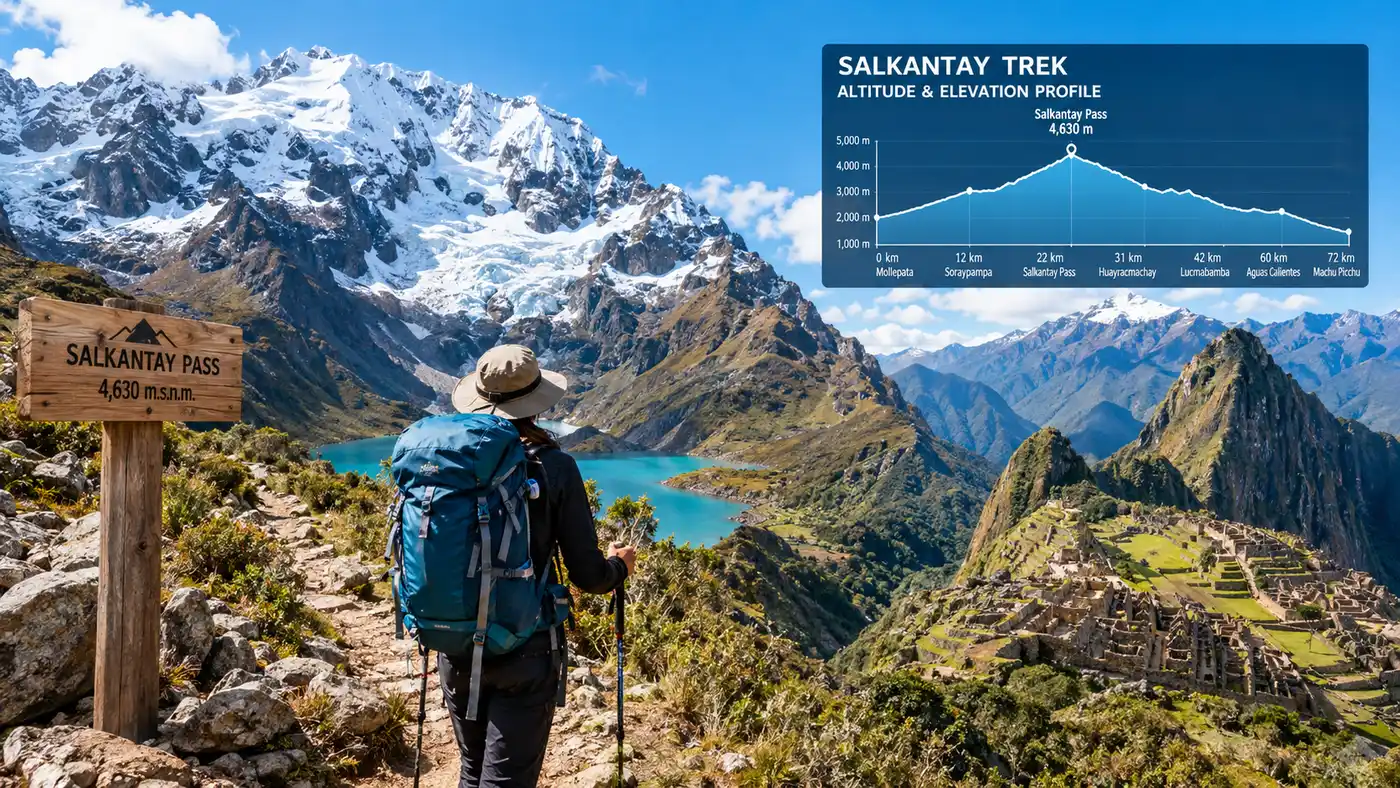
Salkantay Trek Altitude, Elevation Profile, and Salkantay Pass
Your lungs burn around hour three. The air at 4,200 meters feels paper-thin, crisp, and smells faintly of damp moss and mule sweat. Looking up from the valley floor, the jagged glacial teeth of the Vilcabamba mountain range loom overhead, completely indifferent to how hard your heart is thumping. Crossing the high-altitude saddle known as the salkantay pass is the undisputed defining moment of the entire route to Machu Picchu, pushing ordinary hikers into landscapes that feel closer to the moon than to tropical Peru.
Most people obsess over the total hiking distance, but mileage is deceptive in the Andes. Elevation rules everything out here. A flat ten-kilometer walk through a forest is an easy stroll; that same distance gained over glacial moraine with 30 percent less oxygen available to your blood cells will test your mental endurance down to the bone. Understanding the elevation profile, planning your acclimatization schedule, and knowing what to expect as you climb will make the difference between a triumphant summit photo and being hauled up the switchbacks on the back of an emergency rental mule.
Book your salkantay trek to machu picchu experience:
Understanding the Salkantay Trek Elevation Profile
The geography of this trek is a dramatic roller coaster. You begin high, climb brutally higher, and then plunge straight down into sub-tropical valleys where orchids hang from tree branches. Most guided trips kick off at Challacancha or directly at Soraypampa, roughly 3,900 meters above sea level. From that frigid plateau, you grind upward through alpine tundra to the apex of the trail before descending into the cloud forest over the course of a single, punishing day.
What catches many hikers off guard is just how fast the environment shifts. You wake up scraping frost off your tent poles beneath massive glaciers, and by four in the afternoon you are swatting away sandflies in a humid forest. The salkantay trek elevation gain during that second morning demands roughly 730 meters of straight climbing, followed immediately by a knee-buckling drop of over 1,700 meters down to Chaullay. Your joints will feel that descent just as much as your lungs felt the climb.
To put the terrain in perspective, here is the breakdown of how the trail unfolds across each stage of the journey.
| Trail Stage / Checkpoint | Elevation (Meters / Feet) | Daily Elevation Change | Average Hiking Distance | Terrain Profile |
|---|---|---|---|---|
| Cusco (Acclimatization Base) | 3,400 m / 11,150 ft | Baseline | 0 km | Cobblestone streets, steep urban stairs |
| Challacancha to Soraypampa | 3,900 m / 12,795 ft | +500 m gain | 7 km / 4.3 miles | Gradual dirt aqueduct paths, windswept valley |
| Humantay Lake Side Trip | 4,200 m / 13,779 ft | +300 m gain / -300 m loss | 4 km / 2.5 miles (round trip) | Loose scree, steep dirt incline |
| Soraypampa to Abra Salkantay | 4,630 m / 15,190 ft | +730 m gain | 7 km / 4.3 miles | Rocky switchbacks, high alpine moraine |
| Abra Salkantay to Chaullay | 2,900 m / 9,514 ft | -1,730 m loss | 15 km / 9.3 miles | Rocky steps, mud, wet cloud forest trails |
| Chaullay to Lucmabamba | 2,060 m / 6,758 ft | -840 m loss | 14 km / 8.7 miles | Lush river canyon, coffee plantations, dirt track |
| Llactapata Pass to Hidroelectrica | 2,730 m to 1,800 m | +670 m gain / -930 m loss | 11 km / 6.8 miles | Restored Inca steps, steep jungle drop |
| Machu Picchu Sanctuary | 2,430 m / 7,972 ft | Varies by entry point | 4 to 8 km inside ruins | Paved Inca stone terraces, steep staircases |
Looking at the numbers makes one reality obvious. The peak of the hike happens early. You tackle the maximum salkantay trek altitude on day two, meaning your body needs to be ready almost immediately after leaving the van from Cusco. If your legs are feeling weak or you want a realistic assessment of the physical toll before booking, check out our breakdown of the salkantay trek difficulty to see how this profile compares to typical mountain trails.
Pro tip: Do not sleep in thermal layers that make you sweat at Soraypampa. Damp skin in freezing overnight temperatures drops your core body heat rapidly, leaving you exhausted before the pass climb begins at dawn.
Reaching the Summit: Salkantay Pass Elevation and What to Expect
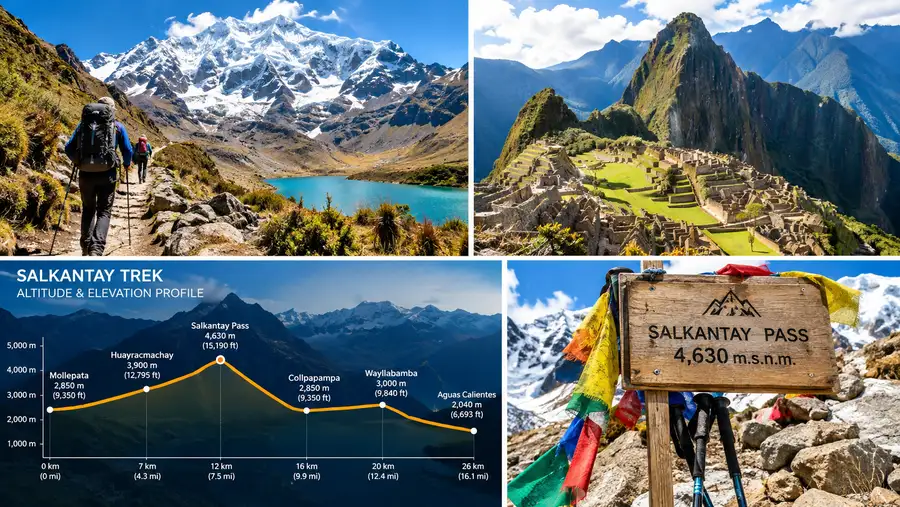
Known locally as Abra Salkantay, this wind-scoured notch sits at an elevation of 4,630 meters (15,190 feet). That makes it the salkantay trek to machu picchu highest point elevation by a wide margin. For comparison, it sits roughly 400 meters higher than Dead Woman's Pass on the classic Inca Trail, which is why hikers often describe this alternative as significantly tougher on the cardiovascular system.
When you stand at the crest of the salkantay pass peru, the towering bulk of Salkantay mountain rises directly to your right. The indigenous Quechua name translates loosely to "Savage Mountain," and standing under its tumbling seracs makes you realize the name is not poetic exaggeration. The full summit of the Salkantay peak reaches 6,271 meters (20,574 feet) into the sky. Avalanches crack in the distance with dull, thudding booms that sound like cannon fire bouncing across the cirque.
Hikers usually pause here by a large pile of stones known as an apacheta. Following Andean tradition, locals place smooth rocks gathered from lower in the valley onto the pile as an offering to the mountain spirits, or Apus, asking for safe passage. It smells of dried coca leaves, raw granite, and freezing wind. You will want your thick gloves and windbreaker out long before you touch the marker stone, because lingering sweat turns icy within three minutes of stopping.
Tackling the Switchbacks: Elevation Gain on the 7 Snakes
The climb from Soraypampa camp up to the ridge is famously nicknamed Las Siete Culebras, or the Seven Snakes. In reality, there are far more than seven switchbacks, but the name stuck because of the way the rocky path coils back and forth across the steep moraine wall. This section delivers the lion's share of your salkantay trek elevation gain for the day.
Pacing is everything on this slope. Walk too fast during the first fifteen minutes and your pulse will hammer in your temples like a drum. The trick used by seasoned mountain guides is ridiculously simple: match one breath to each tiny step. Step, inhale. Step, exhale. Do not gaze up at the ridgeline every thirty seconds, because watching tiny colored jackets crawl across the top rim will make the distance feel impossible. Pick a boulder twenty paces ahead, reach it, pause for two deep breaths, and repeat.
Mule trains share this exact path. When you hear the rhythmic clanking of bronze bells coming up behind you, step toward the mountain side of the trail, never toward the cliff edge. A loaded pack bumping into your chest could easily knock you off balance on the loose gravel. The trail surface alternates between hard-packed mud, sharp stones, and occasional patches of ice if you cross early in the season.
Note: Pack horses can carry you up the pass if you collapse from exhaustion, but renting one on the spot costs around 120 to 180 soles in cash. Guides cannot conjure emergency horses out of thin air, so speak up at breakfast if you feel weak.
Book your salkantay trek to machu picchu experience:
Altitude Sickness and Acclimatization for Mt Salkantay
Let's talk frankly about acute mountain sickness, or soroche. At the salkantay pass elevation, there is roughly 40 percent less effective oxygen per breath than at sea level. Your body compensates by speeding up respiration and dilating blood vessels in your brain, which is why a dull, pounding headache is common among unprepared hikers. Nausea, loss of appetite, and disturbed sleep are classic signs that your blood chemistry is fighting the altitude.
Acclimatization is non-negotiable. You cannot fitness your way out of altitude sickness; marathon runners drop just as fast as casual walkers if they fly into Cusco and head straight for Mt Salkantay the next morning. Spending three full nights in Cusco (3,400 meters) or the Sacred Valley before starting your trek gives your kidneys time to balance blood pH and your bone marrow time to produce additional red blood cells.
Here are reliable strategies to keep your body functional as you climb toward the salcantay elevation:
- Arrive early in Cusco: Spend at least 48 to 72 hours resting, walking gentle city hills, and eating light meals before your trek departure date.
- Drink vast quantities of water: High, dry mountain air strips moisture from your lungs with every exhalation; aim for four liters daily to stave off dehydration headaches.
- Use acetazolamide (Diamox) correctly: If your doctor prescribes it, start taking 125mg twice daily 24 hours before you begin climbing rather than waiting until symptoms hit.
- Sip warm coca tea moderately: Chewing leaves or drinking the tea provides a mild stimulant effect that eases nausea, but avoid chugging five cups after dark unless you want insomnia.
- Skip the heavy steaks: Digestion slows drastically above 4,000 meters; complex carbs like quinoa, potatoes, and oats digest much faster without churning in your stomach.
Keep a sharp eye on your companions. A normal headache that clears up with ibuprofen and water is typical. If someone begins stumbling like they are intoxicated, slurs their speech, or complains of persistent chest rattling, they are showing early signs of severe altitude distress. The only cure for true mountain sickness is descent. No amount of coca candy or supplemental oxygen bottles will fix pulmonary or cerebral edema if the person remains at 4,600 meters.
Descending from Salkantay Mountain Peru into the Cloud Forest
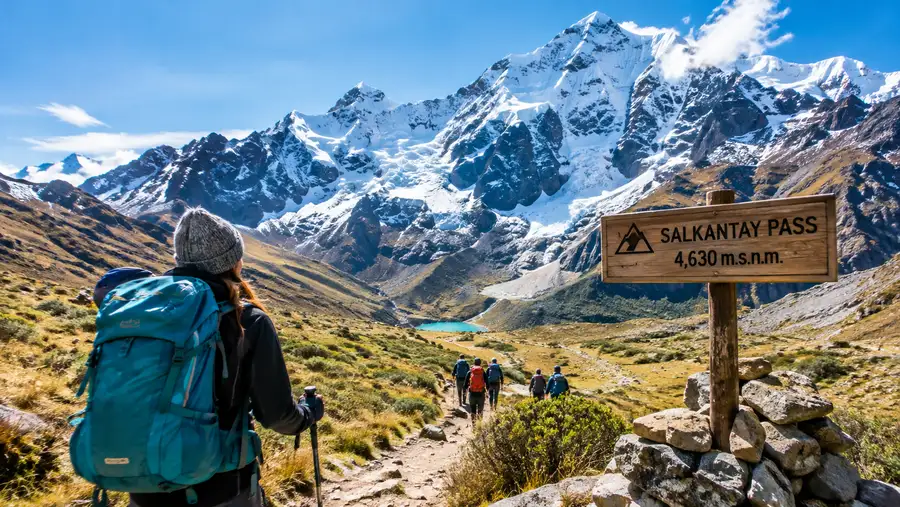
Crossing the ridge is only half the battle. Once you snap your summit photos at Abra Salkantay, you face a knee-shattering downhill leg. You drop over 1,700 vertical meters to reach the overnight campsite at Chaullay or Collpapampa. The first two hours take you through Huayracmachay, a bleak, rocky valley where freezing glacial winds blow straight down your neck.
As you descend, the landscape undergoes a radical transformation. Gray schist and snow give way to scrubby Ichu grass, which gradually transitions into flowering begonias, bamboo thickets, and towering ferns. The air grows noticeably thick and warm within three hours. Suddenly, taking a breath feels easy, your headache evaporates, and your jacket gets stuffed into your daypack as humidity climbs.
This descent destroys quadriceps and toenails. If your hiking boots are even slightly too small, your toes will slam against the front bumper with every downward step for four consecutive hours. Trekking poles are utterly essential here to absorb the shock that would otherwise tear through your patellar tendons. For advice on pole types and proper footwear, take a look at our salkantay trek packing list before you buy gear.
To survive the long descent off the salkantay trek height without hobbling into camp, stick to a few trail habits:
- Shorten your hiking poles: Adjust pole length slightly longer on downhill segments so your torso stays upright rather than leaning forward over drops.
- Lace boots firmly across the instep: Lock your heel firmly into the rear pocket of the boot to prevent your toes from ramming forward into the toe box.
- Take small, springy steps: Bend your knees slightly with each impact; landing on locked knees transfers hundreds of pounds of force straight into your lower back.
- Pack bug repellent within easy reach: Sandflies appear almost immediately once you cross the treeline near Chaullay, and their bites itch for weeks.
Frequently Asked Questions about salkantay pass
What is the highest point on the Salkantay Trek?
The highest point is Abra Salkantay, also called the Salkantay Pass, which sits at 4,630 meters (15,190 feet) above sea level. This is reached on the morning of day two on standard itineraries.
How does the Salkantay Pass elevation compare to the Inca Trail?
Salkantay Pass is roughly 415 meters higher than Dead Woman's Pass (Warmiwañusqa), the highest pass on the classic Inca Trail, which tops out at 4,215 meters (13,828 feet).
Can you hike the pass without taking altitude pills?
Yes, many hikers cross without medication provided they spend at least three full days acclimatizing in Cusco beforehand, drink plenty of water, and keep a slow, consistent hiking rhythm.
Are horses available if I get sick on the climb?
Most commercial guided groups have an emergency horse available for the group. Independent hikers can usually hire a horse and muleteer from locals at Soraypampa for a cash fee of roughly 150 soles.
Quick Reference
- Pass Elevation: 4,630 meters (15,190 feet)
- Day 2 Elevation Gain: 730 meters from Soraypampa
- Day 2 Elevation Loss: 1,730 meters to Chaullay
- Recommended Cusco Acclimatization: 2 to 3 days
- Peak Salkantay Mountain Height: 6,271 meters (20,574 feet)
Book your salkantay trek to machu picchu experience:
The Reality of the Climb
Standing on the pass with the sheer face of Mt Salkantay staring down at you will strip away whatever petty stresses you carried to South America. It is cold, your chest will heave, and your fingers will feel stiff around your trekking poles. Yet, watching the clouds billow up from the Amazon basin to slam against ancient Andean ice makes every grinding step worthwhile. Spend the time acclimatizing in Cusco, respect the sheer physical reality of the altitude, and let the mountain set your pace.
Read more about salkantay trek to machu picchu.