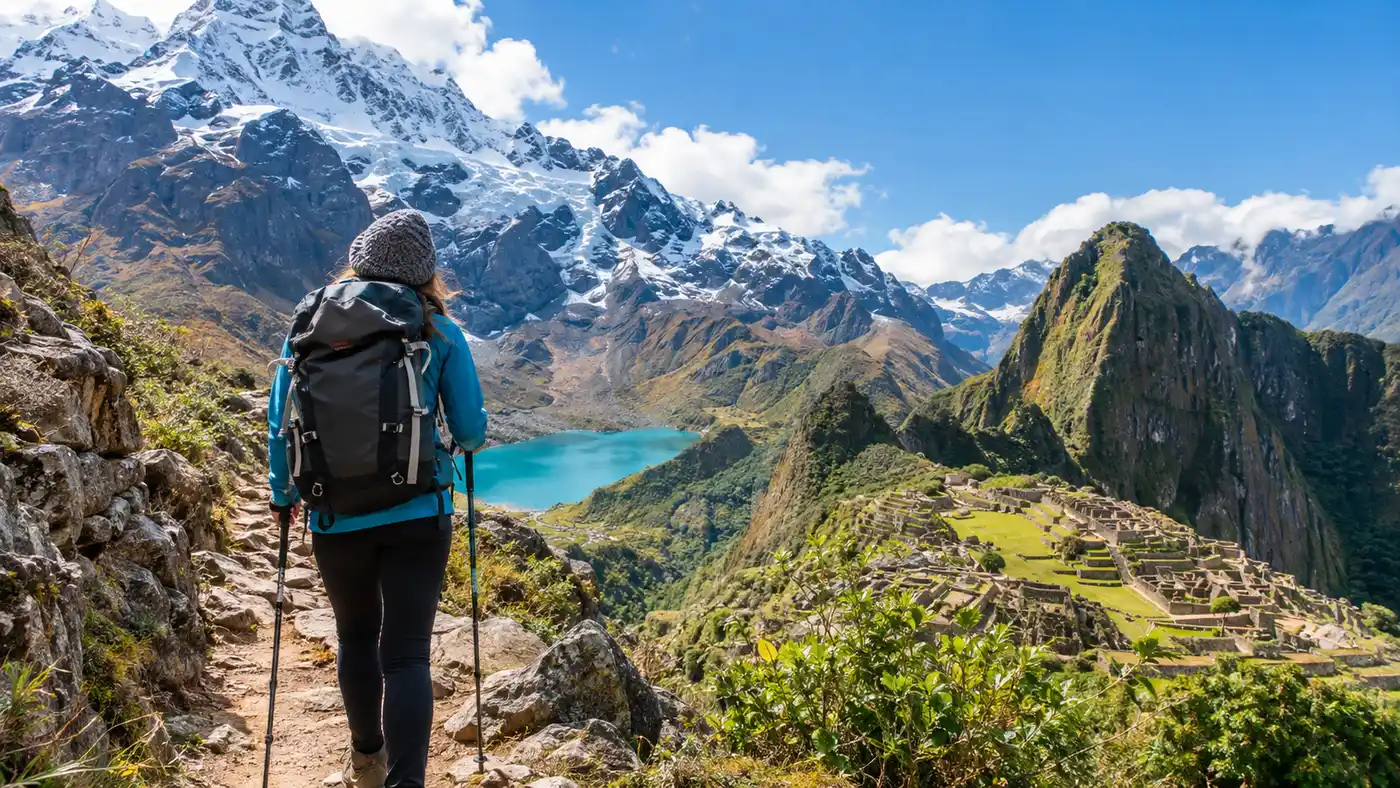
Salkantay Trek Packing List and Gear Guide
Packing for this trail can feel like preparing for two completely different trips at the exact same time. On morning two you are standing at the frozen base of Mount Salkantay in sub-zero winds, yet twenty-four hours later you are swatting biting sandflies in humid, subtropical bamboo forest. Striking the balance between freezing alpine ridges and sticky jungle trails is why getting the best gear for the salkantay trek to machu picchu requires a ruthless layering strategy rather than a stuffed duffel bag.
Most hikers make the mistake of overpacking heavy cotton clothes, only to watch their knees suffer on the grueling 1,800-meter descent into Chaullay. You do not need five changes of clothes or heavy survivalist gadgets. What you actually need is lightweight gear that dries overnight in damp Andean huts, handles violent temperature swings, and leaves you enough room in your daypack for four liters of water. Here is what belongs in your kit, tested against the mud, cold, and rough terrain of the Vilcabamba mountain range.
Book your salkantay trek to machu picchu experience:
Understanding the Mountain Weather and Packing Strategy
The trek takes you from high alpine passes down into the high jungle rim of the Amazon basin. At Soraypampa, your first night camp sitting around 3,900 meters, overnight temperatures routinely drop to minus 5 degrees Celsius between May and September. By day three, near Santa Teresa, you are sweating in 24-degree heat while walking past coffee plants and passion fruit vines. If you look at the Salkantay Pass elevation profile, you will see why a single outfit simply cannot work for a route that starts above the tree line and ends below the mist line.
Your gear splits into two distinct piles. One pile goes into a duffel bag carried by agency horses or transport vans, and the other stays on your back all day in your daypack. Horse weight limits are strict. Most reputable agencies give you a duffel with a hard limit between 5 and 7 kilograms, and that includes your sleeping bag. Anything beyond that stays behind in your Cusco hotel storage room. If you carry your own pack without porters or horses, you need to be even more aggressive with weight savings.
Note: Horse operators weigh your duffel bag at the trailhead in Mollepata. If you are even one kilo over the 7-kilo threshold, you will be forced to pull heavy items out and shove them into your daypack on the spot.
I learned quickly that water weight breaks backs faster than anything else. You will drink a lot at high elevations. When you add two liters of water, an apple, a fleece, and a camera to your personal daypack, you are already carrying roughly 5 kilos on your spine. Keep the daypack small, ideally between 22 and 30 liters.
Clothing System: The Art of Survival Layering
Leave the heavy cotton hoodies at home. Cotton holds sweat, refuses to dry in freezing mountain air, and turns into a cold, wet sponge that steals your body heat. Merino wool or synthetic polyester is the golden rule for every piece of clothing that touches your skin. You want three distinct layers: a moisture-wicking base, an insulating mid-layer, and a protective outer shell.
On the pass, you will likely wear all three at once. As soon as you drop into the tree line, you will strip down to a thin long-sleeve sun shirt and light trekking pants. Having clothing that adapts instantly without needing a full wardrobe change behind a boulder saves time and keeps you from catching chills during rest breaks.
Pro tip: Keep a clean, dry pair of merino wool tights and thick socks sealed inside an airtight Ziploc bag reserved strictly for sleeping. No matter how soaked your hiking clothes get during a stormy afternoon, you will always have guaranteed dry camp clothes.
- Thermal base layers: Two mid-weight tops and one bottom, preferably 200g merino wool, for freezing nights and the early morning pass assault.
- Trekking shirts: Two lightweight synthetic long-sleeve shirts with UPF sun protection to stop high-altitude ultraviolet rays.
- Insulation jacket: A packable down jacket rated down to roughly minus 5 Celsius, which packs small enough to compress into a 1-liter sack.
- Waterproof hardshell: A breathable rain jacket with pit zips and a minimum 10,000mm hydrostatic head rating, because Andean storms hit fast.
- Hiking trousers: Two pairs of quick-dry nylon pants, preferably ripstop fabric. Convertible zip-off pants look dorky, but they shine on day three.
- Gloves and beanie: One windproof fleece beanie and a pair of water-resistant gloves with thermal fleece lining for the alpine morning.
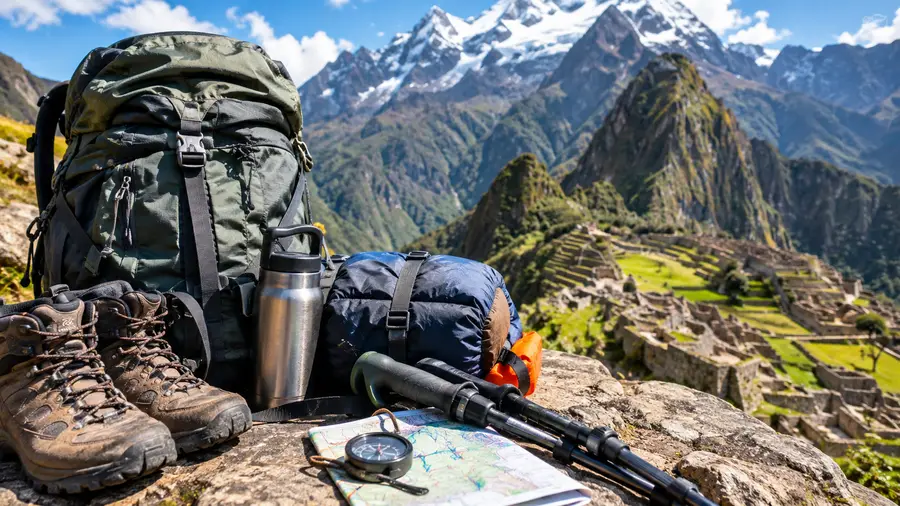
Footwear, Socks, and Foot Care on the Big Descent
Your shoes make or break this trek. The debate between ankle-height hiking boots and lightweight trail running shoes is endless among hikers, but the terrain settles it easily. The first two days present loose shale, steep gravel, and mud. Days three and four feature slick granite river stones and dirt tracks. If you have weak ankles or carry a heavy pack, a broken-in hiking boot with decent ankle collar support prevents twisted joints on the descent from 4,630 meters down into Wayracmachay.
Trail runners work fine if you are used to them and your pack is light. They dry faster after stream crossings, which is a massive plus when afternoon downpours hit. Whichever you choose, do not show up with brand-new shoes right out of the box. Walk at least 40 kilometers in them at home, on hills, before boarding your flight to Peru. Blisters on day one make the remaining 60 kilometers feel like walking on hot coals.
Socks matter almost as much as your footwear. Bring four pairs of cushioned merino wool socks. Wool regulates foot temperature, cushions impact, and fights odors naturally over multiple days. Pair them with a small roll of moleskin or leukotape applied to hot spots before an actual blister develops. When your heels begin to rub on an incline, stop walking immediately and tape them. Waiting until camp is a rookie mistake that ruins entire weeks.
Book your salkantay trek to machu picchu experience:
Sleep Systems and Carrying Gear
If you sleep cold, nights on the Salkantay trail can be brutal. Even in glamping domes or basic wooden refugios, insulation from the ground is sparse. You need a sleeping bag with a comfort rating between minus 5 and 0 degrees Celsius. Keep in mind that a bag's "limit" rating is about survival, not comfortable rest, so look closely at the comfort metric printed on the tag. You can easily rent reliable down bags in Cusco for around $6 per day if you do not want to fly internationally with a bulky four-season mummy bag.
Trekking poles are not optional luxuries on this trail. The descent from the mountain pass is notoriously unforgiving on patellar tendons, dropping more than a vertical mile in a single afternoon. A sturdy pair of aluminum or carbon fiber poles with reliable flip-locks takes roughly 20 percent of that impact off your knees. Pack rubber tips for the final day when walking along the gravel train tracks toward Aguas Calientes.
| Gear Item | Recommended Spec | Approximate Weight | Trail Necessity |
|---|---|---|---|
| Sleeping Bag | Down or synthetic, -5°C comfort | 1.2 - 1.6 kg | Critical (or rent in Cusco) |
| Daypack | 24 to 30 liters with hip belt | 0.8 - 1.1 kg | Critical |
| Trekking Poles | Flick-lock adjustable, carbide tips | 450 - 550 grams (pair) | High priority |
| Headlamp | 200+ lumens with red-light mode | 80 - 100 grams | Essential for dark camps |
| Power Bank | 10,000 to 20,000 mAh rugged | 250 - 450 grams | Essential (cold kills phone batteries) |
| Water Filter / Tabs | Squeeze filter or chlorine dioxide | 60 - 100 grams | Essential for tap refills |
Electronics, Toiletries, and Trail Realities
Charging ports are rare until day three, and some campsites charge 10 or 15 soles to plug your phone into a sketchy power strip behind the kitchen tent. The freezing high-altitude air drains lithium-ion batteries twice as fast as normal. Keep your phone and camera batteries buried deep inside your sleeping bag next to your chest at night. A reliable 10,000 to 20,000 mAh external battery keeps your devices alive throughout the trek.
For hygiene, wet wipes are your shower for at least two nights. Even when remote camps offer "hot" showers, the gas burners frequently malfunction or run out of propane, leaving you shivering in an unheated concrete stall. Carry a small quick-drying microfiber towel, biodegradeable camp soap, and half a roll of toilet paper kept dry in a zip-top freezer bag. Trailside latrines never have paper provided.
- High-DEET bug repellent: Essential starting on day three. The biting gnats near Santa Teresa and the Hydroelectric tracks ignore mild botanical sprays entirely.
- Broad spectrum sun cream: Factor 50 or higher, applied to ears, neck, and hands every two hours in the thin Andean atmosphere.
- Altitude medication: Acetazolamide (Diamox) or natural coca leaf tea bags, along with ibuprofen for tension headaches triggered by elevation.
- Water purification tablets: Safe backup in case you cannot find boiled water at small homesteads along the route.
- Cash in small Peruvian Soles: Around 300 to 400 soles in 10 and 20 notes for snacks, toilet access fees, and emergency transport.
Frequently Asked Questions about best gear for the salkantay trek to machu picchu
Can I rent gear in Cusco instead of flying with it?
Yes. Cusco is full of gear shops where you can rent warm down sleeping bags, trekking poles, rain ponchos, and 30-liter backpacks for very reasonable daily rates. Inspect zippers, seams, and pole locks thoroughly in the shop before paying your deposit.
Do I need full waterproof hiking boots or are trail runners enough?
Trail runners work wonderfully during the dry season from May to September if you have strong ankles and are accustomed to rocky trails. If you are hiking in April or October when the shoulder season rains arrive, waterproof mid-cut boots keep your feet much warmer in slush and slick mud.
How heavy should my daypack be while hiking?
Keep your daypack between 4 and 6 kilograms maximum, including water. Carrying more than that turns the relentless uphill climb toward the pass into an exhausting slog, especially above 4,000 meters where oxygen levels are roughly 40 percent lower than at sea level.
Quick Reference
- Horse duffel weight limit: strictly 5 to 7 kg
- Daypack capacity sweet spot: 24 to 28 liters
- Sleeping bag comfort rating: -5°C (23°F)
- Cash to carry on trail: 300 - 400 Peruvian Soles
- Total trekking distance: roughly 74 kilometers
Book your salkantay trek to machu picchu experience:
Before You Zip Your Pack
Do a trial packing run on your living room floor three days before you leave. Put your loaded pack on, walk up and down a flight of stairs five times, and take out whatever you secretly know you do not need. The mountains have a way of stripping away pretension. When you reach the high pass under the white jagged peak of Salkantay, you will not care about having a fresh shirt for dinner, but you will be infinitely grateful for dry wool socks, a windproof shell, and sturdy trekking poles that save your knees on the rocky trail ahead.
Read more about salkantay trek to machu picchu.